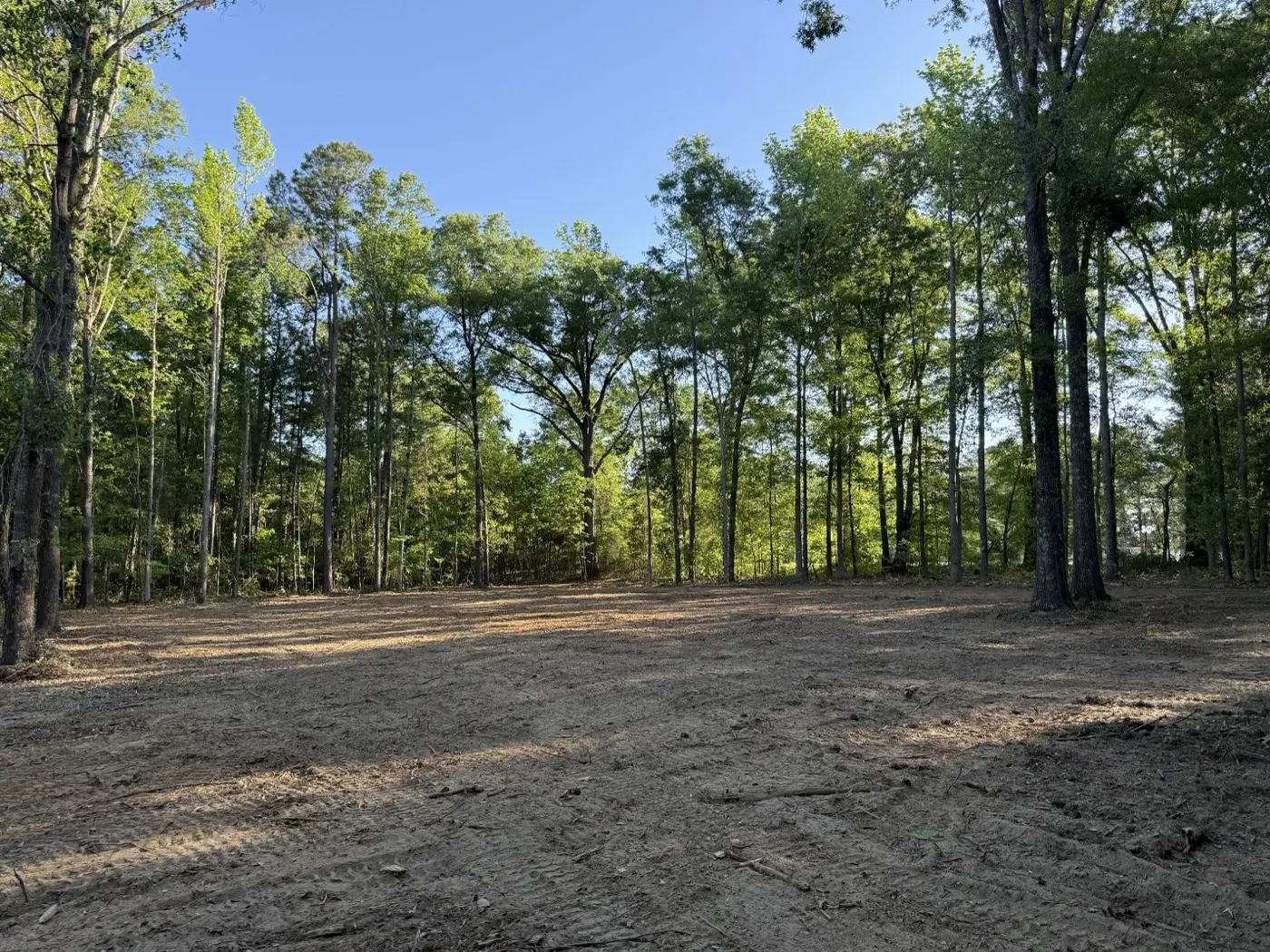
Forestry mulching in Bishopville clears thick underbrush and leaves a flat mulch layer behind. The growth gets shredded right where it stands, so the tract stays clean. Lee County has plenty of land that suits this work, since so much of it is farmed. Field edges close in every season, and idle acreage goes to scrub within a few years. Bishopville sits about thirty minutes west of Florence on I-20, which puts it in our normal range. Estimates are free and we come look at the tract before we price it.
The full picture of how forestry mulching works is on our service page. This page covers Bishopville and the rest of Lee County. You can also see everything we do in Bishopville on the city page. Tracts here run from a half acre of yard edge up to large farm parcels. We size the plan to the ground and the growth standing on it. Heavy stems and small trees take longer than briars and light brush. Land that has been let go for years takes more passes than a field edge. We tell you what the tract needs before the work starts.
Tell us about the job. We will get right back to you.
Lee County is farm country, and cotton has long been the leading crop here. Crop land ends at a ditch bank or a wood line, and that line moves. Young pines and hardwood sprouts come out of the edge and lean into the rows. Briars fill in under them until equipment cannot get close. Forestry mulching cuts that edge back and grinds the growth into the ground. The mulch stays put and helps hold sandy soil on the bank. You get the turn row back and the field line stays clean.
Ditch banks matter for drainage, and brush on them slows water down. Lee County ground runs flat across the coastal plain, so water moves slow already. Sandy loam drains fast on top but holds water in the low spots. Clearing the bank lets the ditch carry water instead of catching limbs and trash. We work the bank carefully and keep the shape of the ditch intact. Heavy stumps in the bank can be dug out later if they sit in the way. Most field edge jobs run in a straight line, so the work moves along fast.
Timber tracts around Bishopville sell as hunting and recreation land. Many are planted pine with natural hardwoods mixed through the low ground. After a few years without work, the understory closes and you cannot see or walk it. Forestry mulching thins that layer and leaves the standing timber alone. Shooting lanes and trail edges open back up in a single pass. We keep the pines and take out what crowds them. The mulch breaks down and new browse comes in at ground level. That growth sits low enough for deer to reach.
The Lynches River runs along parts of the Lee County line. Land near the river is bottomland hardwood with wet ground under it. Wet tracts need a light touch, and our track skid steer spreads its weight. We stay off the softest ground until it dries enough to hold. Higher tracts sit in the sandhills across the north of the county. That sandy ground works most of the year and dries fast after rain. We plan the day around which part of the tract will carry the machine. That keeps ruts down and keeps the job moving.
Fence rows go wild faster than anything else on a rural place. Birds drop seed along the wire and nothing ever mows there. In a few seasons the line becomes a hedge of briars and saplings. Pulling wire out of a grown up fence row is slow, dirty work. Forestry mulching clears the line first so the fence is easy to reach. Whole sections come down while the posts stay in place. Owners around Bishopville use this to reset pasture lines and property corners. The cleared strip also makes a decent lane for a truck or tractor.
Cleared ground grows back fast in this climate. Sprouts come back from cut stems within a season or two. One way to hold it is to keep the ground mowed once it is open. That is where brush hogging on open fields comes in, once the ground is smooth. If you want the tract bare for building, full land clearing down to dirt is the other route. Stumps left in mulched ground can be handled later by digging stumps out. We can talk through which mix fits your tract when we come look.
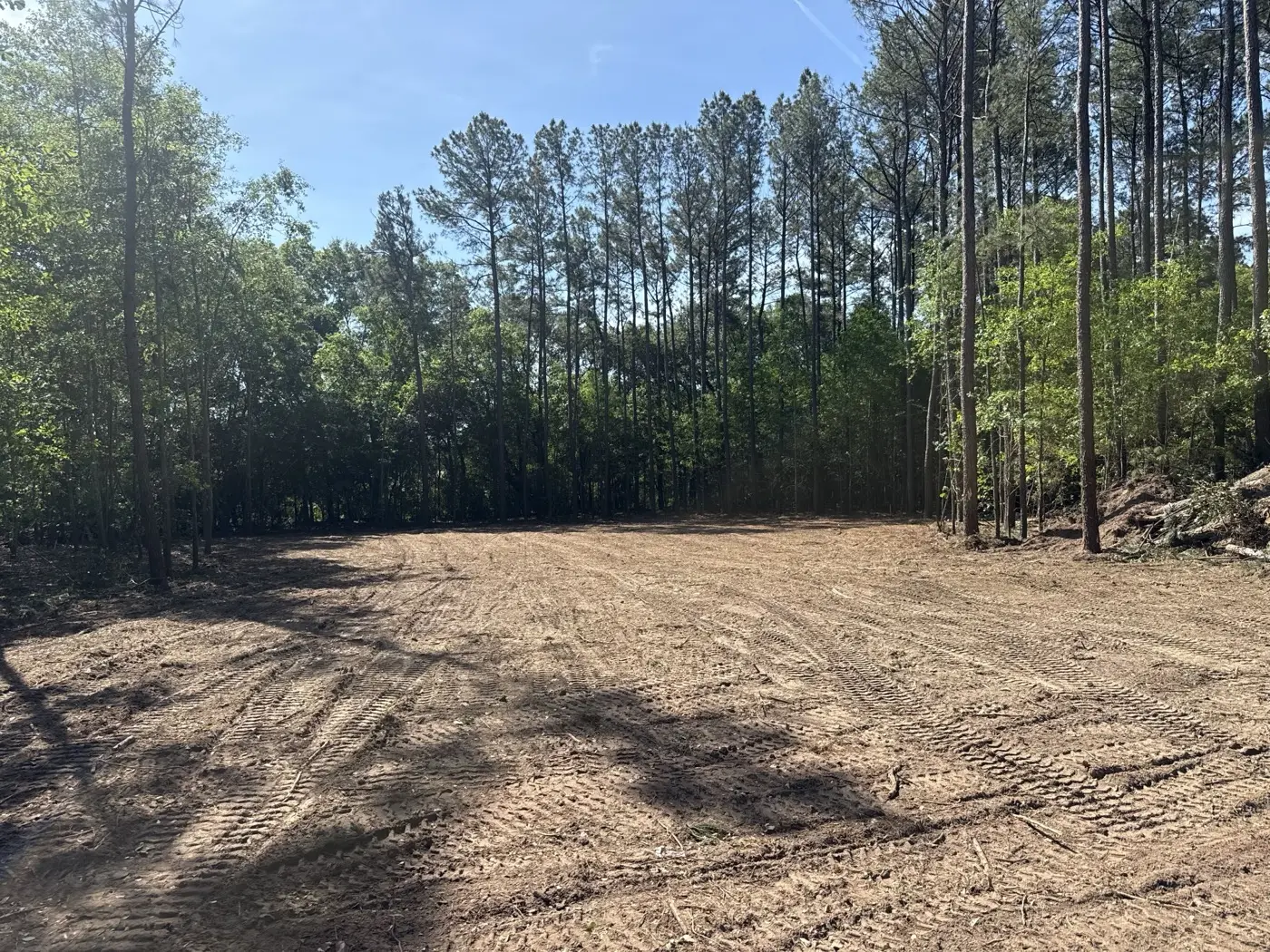
Free, no-obligation estimates throughout Lee County.
(217) 741-6050From the first walk of the property to the last pass of the grade, here is exactly how it goes.
We come see the actual job first: the structure, the brush, the ground under it, and how equipment gets in. Demo and land work price off what is really out there.
You get a free, no-obligation quote with a real number and a real plan: what comes down or gets cleared, where the debris goes, and when. It holds unless the scope changes.
The equipment shows up when we said and the job runs the way we quoted it: teardown, clearing, digging, grading. If something unexpected turns up, you hear about it right away, not on the bill.
When the work is done we go over the property together. Debris hauled the way we agreed, grades draining the right way, the site left clean. Done means you say it is done.
What Bishopville property owners ask us most about forestry mulching. Don't see yours? Give us a call and ask.
What forestry mulching costs per acre, why the spread is wide, and when mulching beats cut-and-haul clearing on Pee Dee ground. Market ranges explained.
Read more →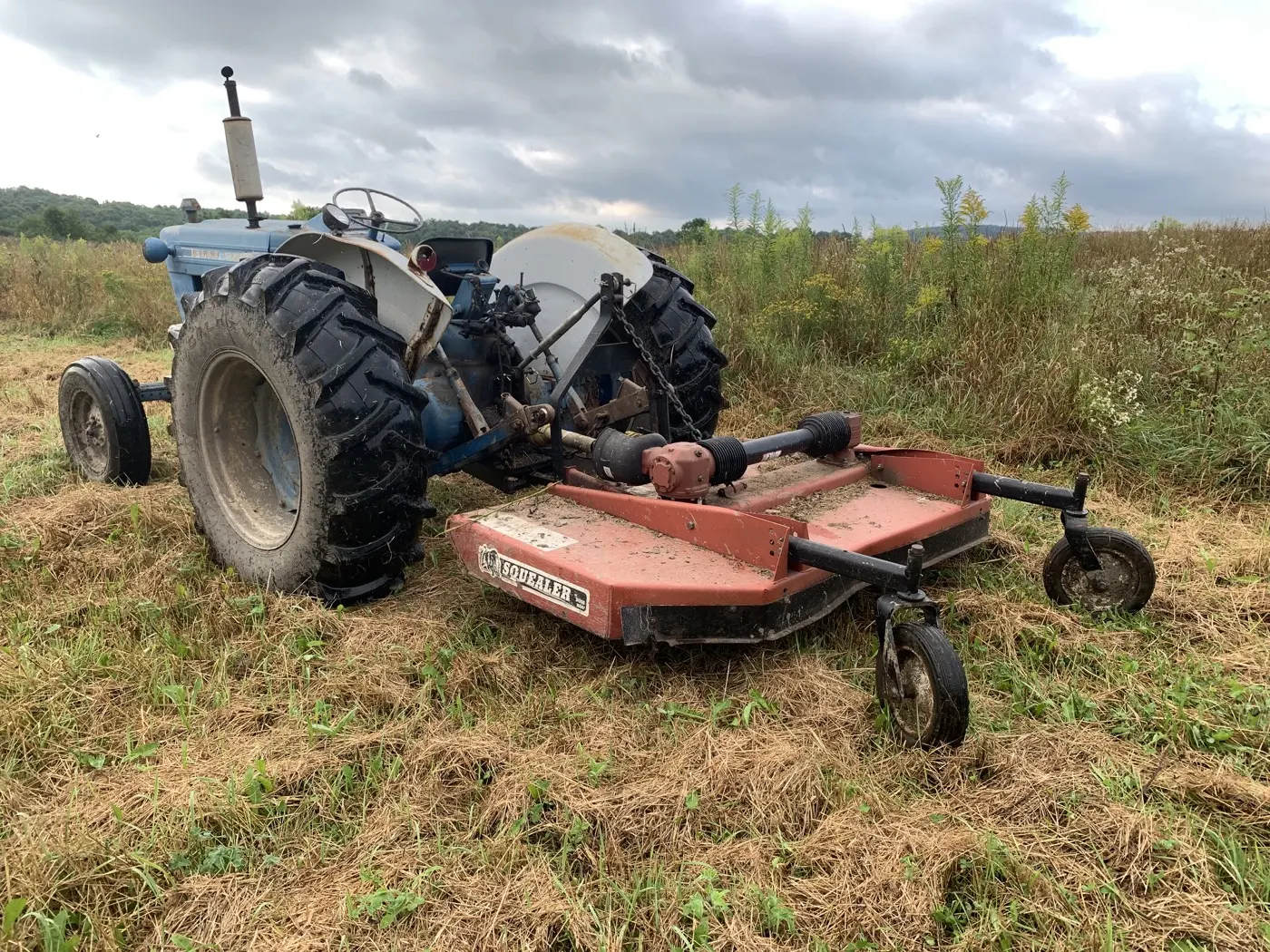
What bush hogging costs per acre and per hour, what minimums to expect, and why a yearly cut is the cheap insurance for Pee Dee ground.
Read more →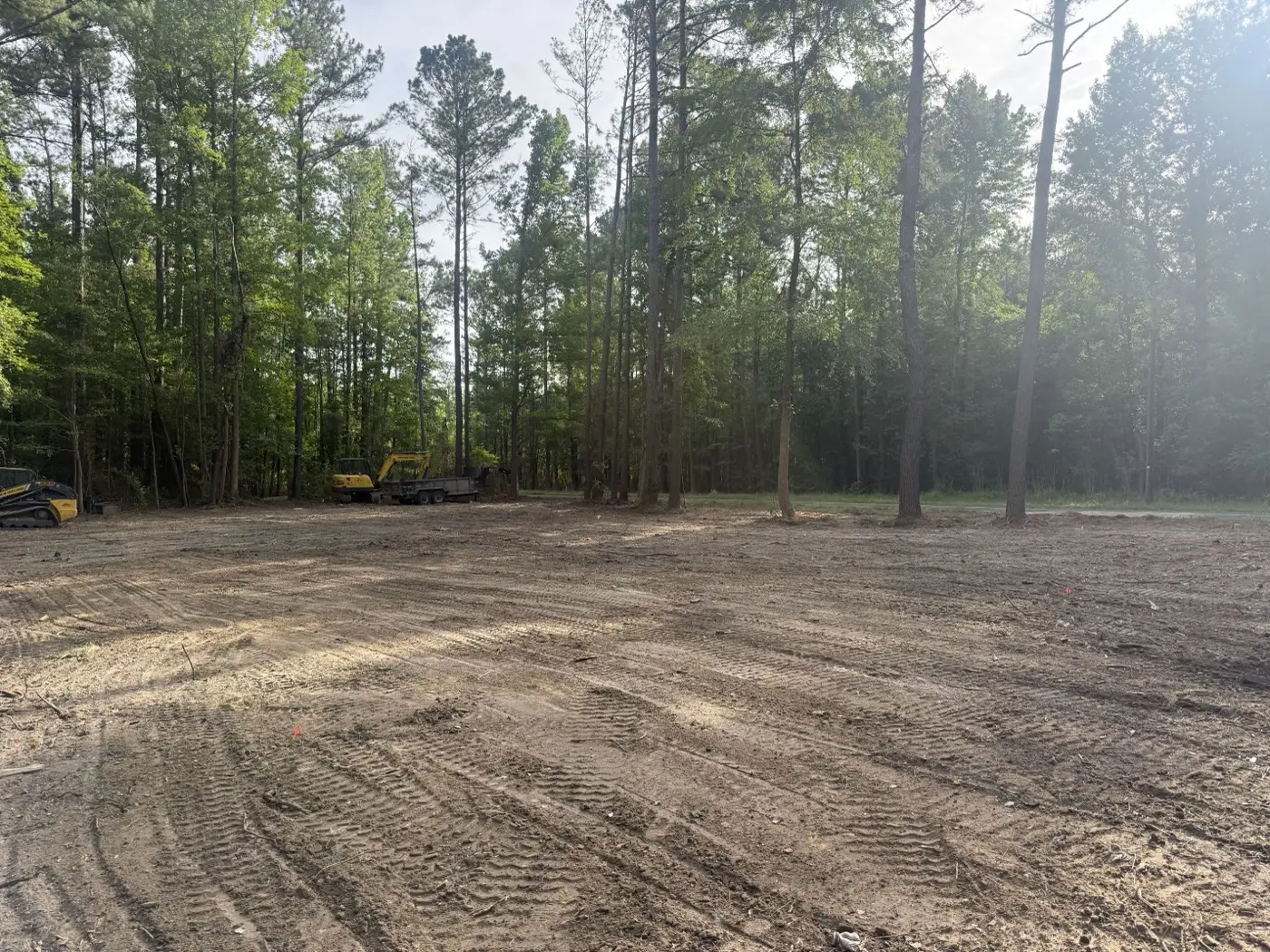
What land clearing costs per acre in South Carolina, what moves the price, and why wet-season ground around Florence changes the math. Real market ranges.
Read more →A structure that needs to come down, an overgrown lot, stumps in the way, ground that holds water, a pad or driveway that needs building? Call or send the form. We come look at the property and hand you a free quote with a real number on it.
Tell us about the job. We will get right back to you.