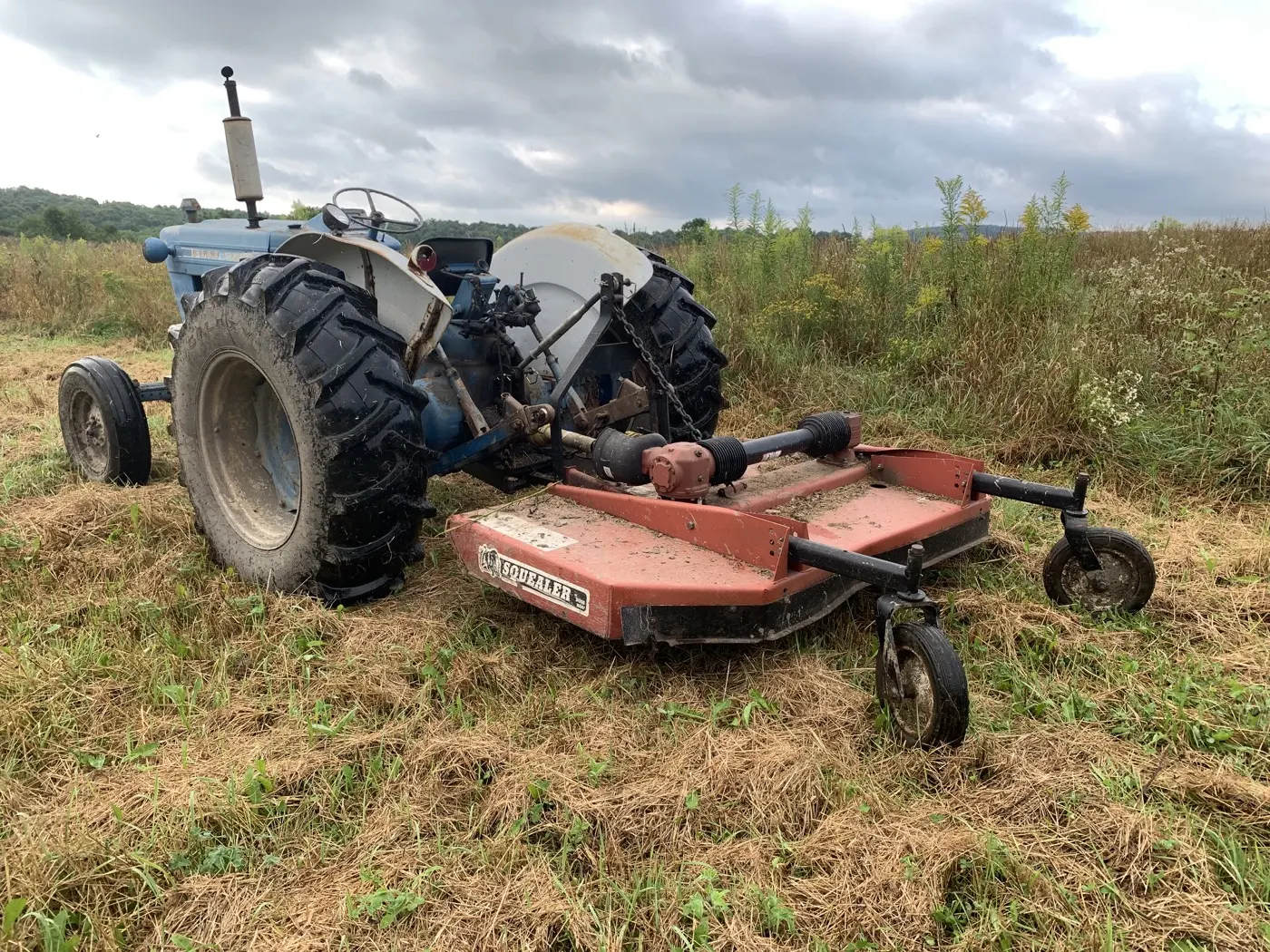
Brush hogging in Darlington, South Carolina keeps a lot from going back to woods. We pull a rotary cutter behind the tractor and knock the growth down to a few inches. Tall grass and briars go down in one pass, along with saplings an inch or two thick. The cut material stays on the ground and breaks down where it falls. That makes it the quickest way to get a rough lot looking kept again. Around here the growing season runs long and warm. A lot left alone from spring to fall can go from grass to head high brush.
You can read what brush hogging covers on the service page, including what the tractor handles. Darlington sits about 11 miles from where our tractor stays, so a run up there is short. We cut lots inside the city and fields out in the county on the same trip. Sandy ground here dries quick, which means fewer weather delays than heavier soil sees. Some lots need one pass to get caught up. Others go on a schedule and stay that way through the season. Either one starts with a look at the lot and a free estimate. For the other services we bring to town, see our Darlington page.
Tell us about the job. We will get right back to you.
Darlington covers a little under five square miles, and vacant lots are scattered through it. A lot that misses one season looks rough. Two seasons and it is brush. City lots come with things a cutter has to respect. Curbs, meter boxes, culvert ends and old fence posts hide in tall grass. We look a lot over before the first cut when it has stood a while. Wire and scrap tear up a cutter and throw hard. Once that gets marked or moved, the tractor makes short work of the rest. A small town lot is usually finished in well under a day. The cut leaves an even stubble you can see across.
A notice about an overgrown lot puts a lot of town cuts on the calendar. An owner who lives somewhere else gets that letter and needs the lot handled fast. We can cut without you being there, as long as the property lines are clear. Send a parcel map or a dropped pin, and mark anything you want left standing. Ornamental trees and young plantings get worked around. After the first cut, holding a lot in shape is easy. A pass every few weeks through the growing season keeps it sharp. Twice a season keeps it out of brush. Rental property owners around Darlington often set it up that way and leave it alone.
Darlington County was farm country long before it was anything else, and a lot of it still is. Cotton came first and bright leaf tobacco followed. That made Darlington the biggest tobacco market in the state. Plenty of that old ground is out of production now. Field edges creep in first, then the middle goes. A yearly cut holds a field where it is and keeps the tree line from marching. Landowners run us over pasture, hay ground gone rough, ditch banks and the strips between planted rows. Hunting tracts get the same before the season, so paths stay open. Open ground cuts fast, so a big field costs less per acre than a town lot.
Timing changes what the tractor faces. Growth here runs from spring into fall, so a field cut in May looks different by August. Most owners pick one cut in early summer and another before winter. Fence lines are their own job. A line that has grown in gets tight. We take the tractor down both sides where there is room. A cleared line also gives room to stretch new wire or set posts. Where the growth along a line has gone past sapling size, mulching is the better tool. Wet spots matter as well, because a tractor sinks in bottom ground that looks solid from the road. We stay off soft ground and come back after it dries.
A rotary cutter has a limit, and knowing it saves you money. The tractor handles grass, briars, weeds and saplings up to about an inch or two at the base. Past that, the stems are too thick to cut clean and hard on the machine. That is the point where mulching the heavier growth takes over. A mulcher grinds standing stems into chips and leaves a mat behind. It costs more by the hour and it clears ground a cutter cannot touch. On a lot that has sat five or ten years, the two get used together. We brush hog the open parts and mulch the thickets and the tree line.
Some jobs go past cutting altogether. A tract that has to end up as bare dirt calls for a full clearing job. Trees and stumps come out, and the ground gets shaped after. Brush hogging still plays a part. It knocks the growth down first and shows what is standing. Stumps hidden in tall brush are the main hazard for a cutter. On a lot like that, getting stumps out of the way comes before the first pass. Tell us what the lot needs to become and we will point you at the right tool. You can ask for an estimate and we will come look at it.
Free, no-obligation estimates throughout Darlington County.
(217) 741-6050From the first walk of the property to the last pass of the grade, here is exactly how it goes.
We come see the actual job first: the structure, the brush, the ground under it, and how equipment gets in. Demo and land work price off what is really out there.
You get a free, no-obligation quote with a real number and a real plan: what comes down or gets cleared, where the debris goes, and when. It holds unless the scope changes.
The equipment shows up when we said and the job runs the way we quoted it: teardown, clearing, digging, grading. If something unexpected turns up, you hear about it right away, not on the bill.
When the work is done we go over the property together. Debris hauled the way we agreed, grades draining the right way, the site left clean. Done means you say it is done.
What Darlington property owners ask us most about brush hogging. Don't see yours? Give us a call and ask.
A structure that needs to come down, an overgrown lot, stumps in the way, ground that holds water, a pad or driveway that needs building? Call or send the form. We come look at the property and hand you a free quote with a real number on it.
Tell us about the job. We will get right back to you.